← Browse all speaker resources
All Things AI · Speaker resources
What Makes a Good Presentation?
Educate and inspire. Help people see what's possible and give them the knowledge to take the next step.
I want to leave your session understanding something I didn't understand when I walked in. I also want to leave curious, excited about a possibility I hadn't considered, and ready to do something with what I've learned.
Show us why you care. Bring us into the problem, the discovery, and the moment your thinking changed. Give us the evidence to understand your idea and a reason to imagine what we could do with it.
The quick answer
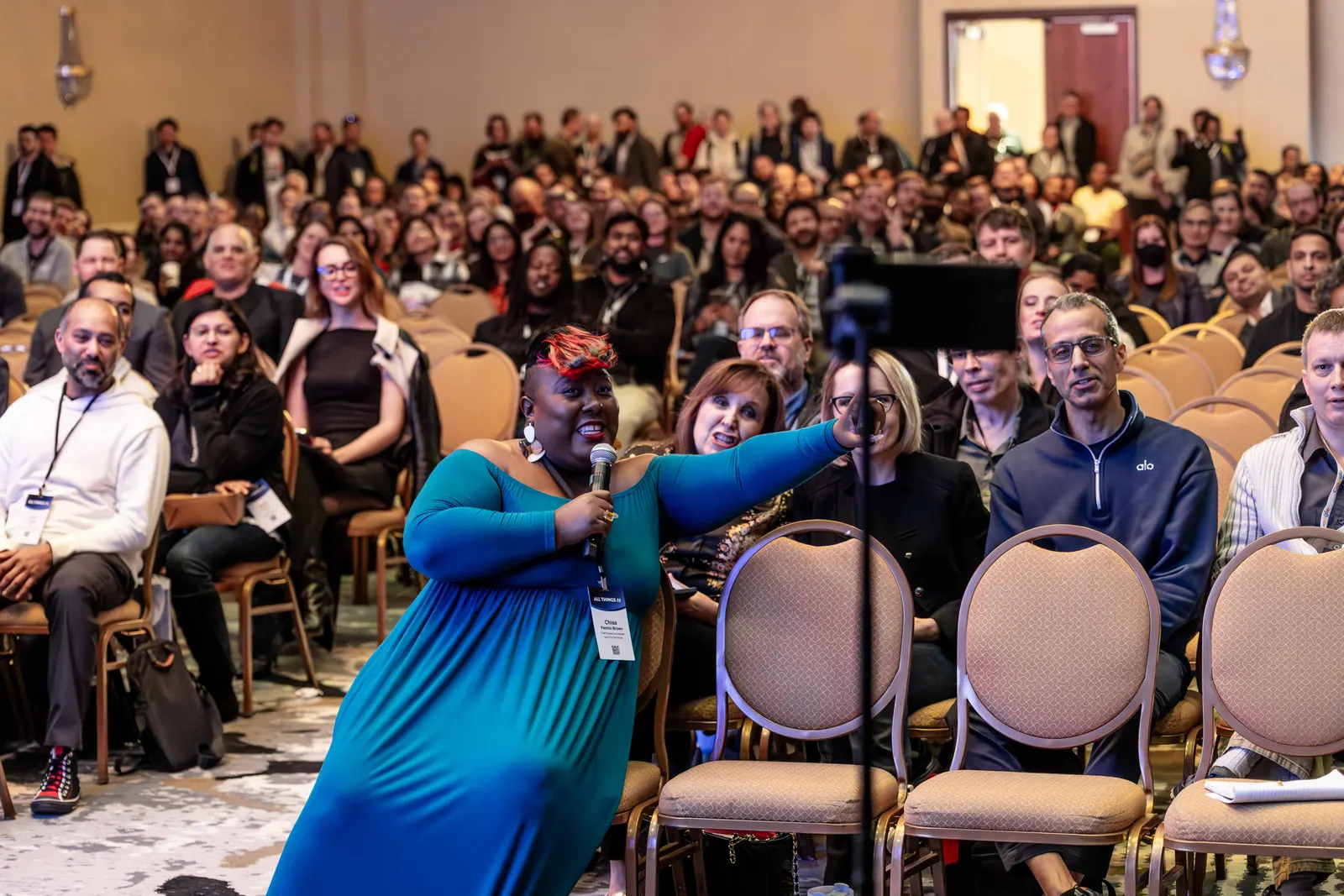
A great conference presentation educates and inspires. Start with a problem the audience cares about, teach a clear idea, support claims with evidence, and help people apply what they learn. Use your personality, examples, and a meaningful next step to leave attendees both able and eager to act.
Talk examples from our archives
Watch these talks with a specific question in mind: what could you learn from the way the speaker connects an idea to the audience? The notes below offer starting points for your own preparation.

Give the audience a question worth following
The Death of the Browser
Rachel-Lee Nabors · All Things AI 2025
Rachel’s keynote puts a familiar part of daily life—the browser—at the center of a provocative question about the future. Start with the title, then consider how the talk develops the possibility it invites you to imagine.
Try this in your talk: As you watch, identify the question that draws you in, the explanation that helps you evaluate it, and the idea you want to explore afterward. Use that sequence to examine your own opening.

Make a technical possibility worth exploring
When AI Meets Quantum: Expanding the Boundaries of Machine Intelligence
whurley · All Things AI 2026
This keynote explores the convergence of quantum computing and AI. Use it as a viewing exercise in introducing an ambitious technical subject to a conference audience.
Try this in your talk: Listen for how the speaker establishes relevance, explains unfamiliar ideas, and invites the audience to consider what could come next. Where would someone new to your subject need that same help?

Let the audience experience the idea
An AI Agent Keynote
whurley · All Things AI 2026
In this excerpt from his 2026 keynote, whurley gives part of the presentation to an AI agent. At 1:13, the agent introduces itself; later, whurley returns to explain the setup. The demonstration becomes part of the presentation itself.
Try this in your talk: Consider whether you can let an audience experience the idea you are explaining. Make clear what they saw, what you prepared, and what the demonstration can establish.

Make the human stakes clear
Who Does the Algorithm Save: Preserving Humanity with AI in Healthcare
Yassah Reed · All Things AI 2026
Yassah names the learning objectives, asks why the audience should care, and at 0:35 invites listeners to imagine being a patient in pain. It is a concrete opening to a discussion of the human consequences of AI decisions.
Try this in your talk: Show who is affected by the problem before moving into its technical details. Use the recording to study presentation technique; evaluate the underlying healthcare claims through their original research sources.
What should the audience leave able and eager to do?
Start with two questions: “What will someone be able to do after this session?” and “Why will they want to do it?” Make the learning outcome specific enough that you could tell whether it happened. Connect it to a possibility or problem that matters to the audience.
For an AI session, that might mean comparing two approaches to a problem, recognizing a failure in an evaluation, or designing a small test before committing to a larger project.
Tell people who the session is for and what knowledge you're assuming. Define unfamiliar terms. Give them a reason to care about the problem before you ask them to follow the solution. Use that learning outcome to decide what belongs in the talk.
How do I inspire people?
Show them something worth pursuing. What could they improve, build, question, or make possible? Bring that possibility close enough that they can picture themselves taking part.
Tell a real story. What were you trying to do? What got in the way? What surprised you? Share the moment you saw the problem differently, then explain what you did with that insight. Include the uncertainty and the work it took.
Let your enthusiasm come through in your own voice. You can be thoughtful, funny, quiet, or energetic. Help us understand what keeps you curious and why this deserves our attention.
For an AI talk, show a useful possibility, explain the evidence and limits, and offer a first experiment the audience could try. Give people a reason to think, “I want to explore that,” and enough direction to begin.
How much should I try to cover?
Choose a central lesson you can explain well. Build toward it in meaningful steps. After a complicated idea, pause, recap the point, and show an example before adding another layer.
The evidence: Richard Mayer's synthesis of multimedia learning research supports removing irrelevant material, signaling what matters, and placing related words and visuals close together. The aim is to reduce unnecessary mental work while someone is learning. Mayer, 2005.
A separate meta-analysis covering 56 investigations found small-to-medium benefits for retention and applying learning to new problems when multimedia instruction was divided into meaningful segments. Segmentation also increased learning time. Rey and colleagues, 2019.
Our application: give ideas room to land. Put the extra detail in a useful resource people can revisit. These findings support meaningful breaks; they don't prescribe a universal number of minutes between them.
From the All Things AI archives
This is who the talk is for
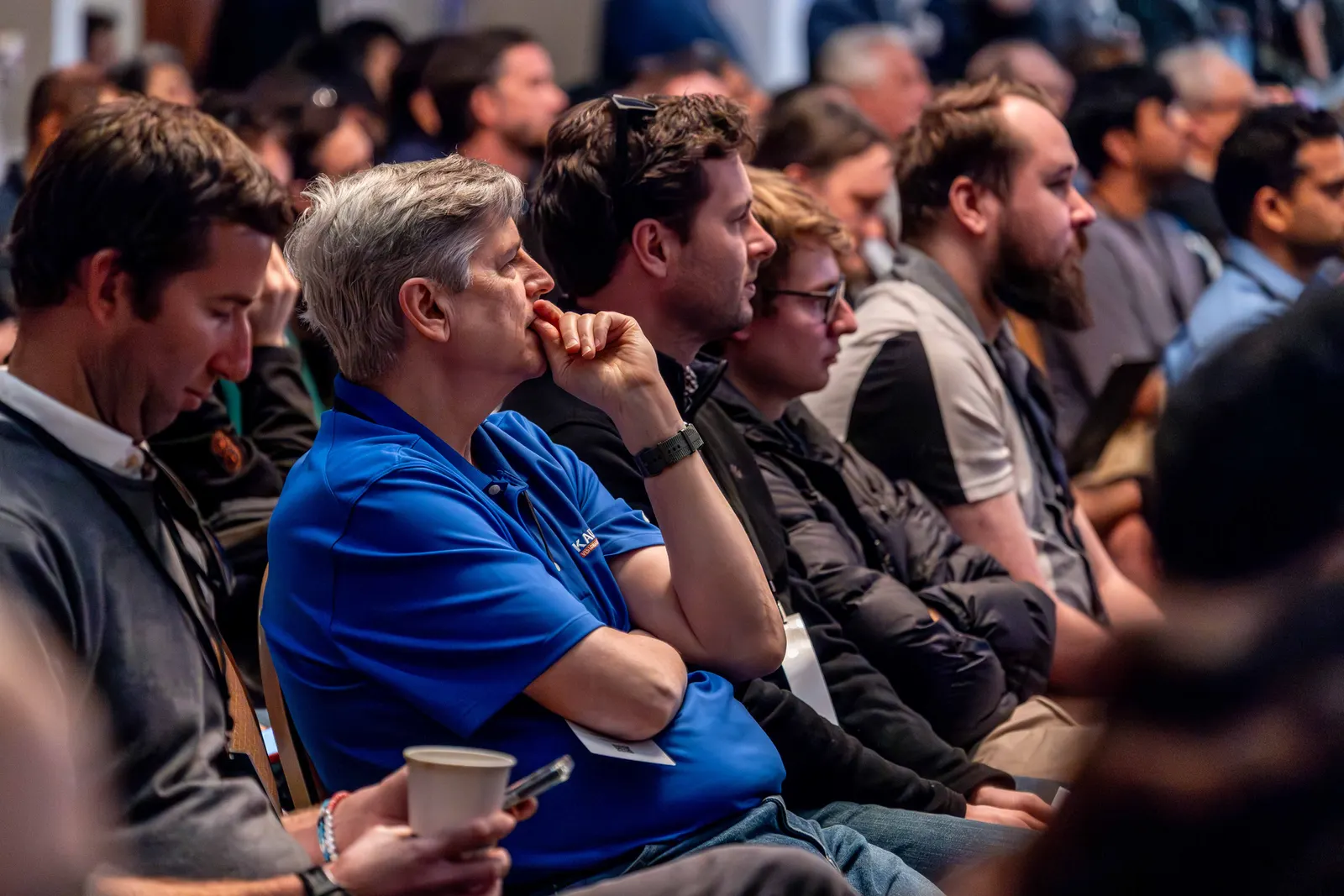
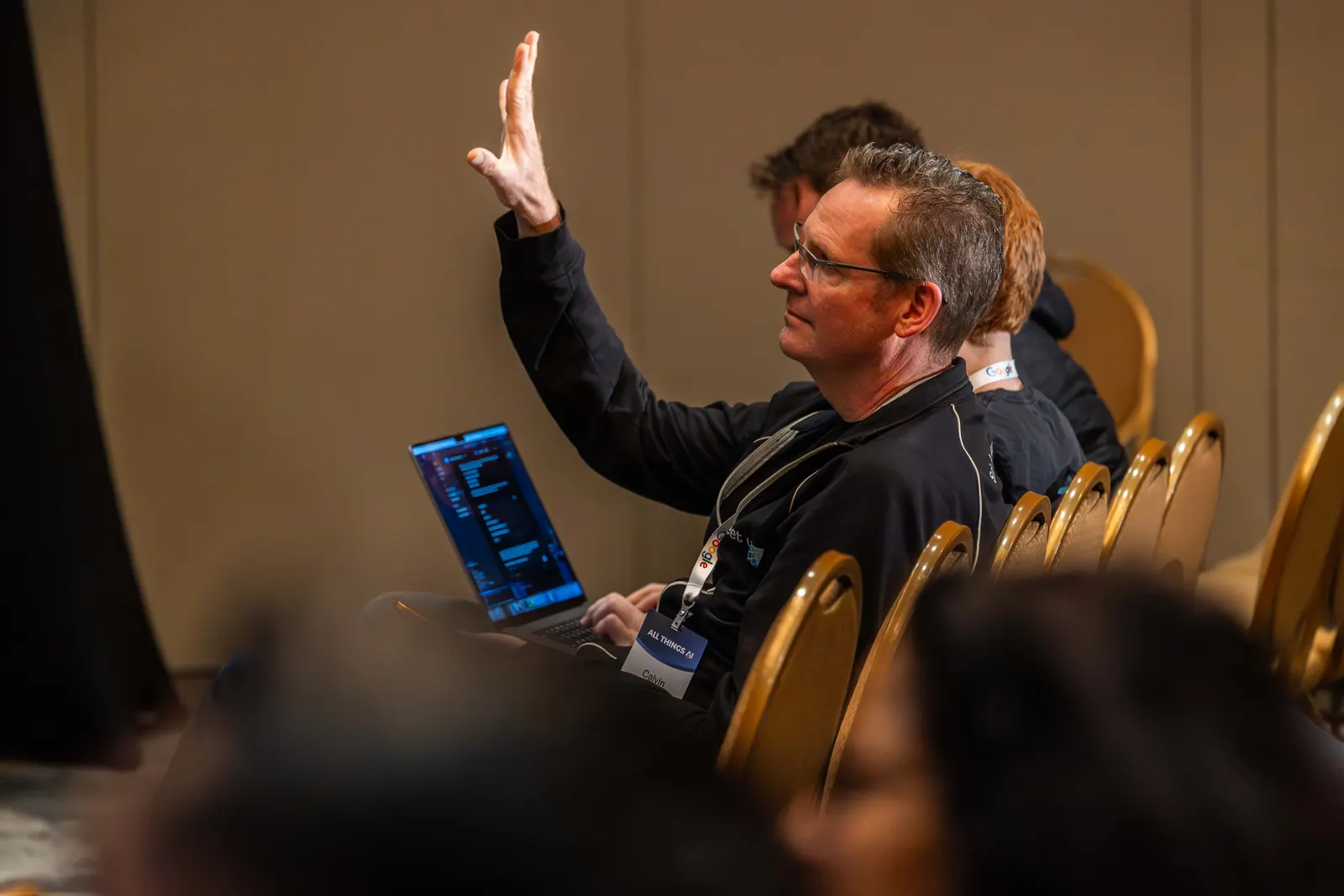
Give people a reason to listen, space to think, and a chance to join the conversation.
What should my slides do?
Help people understand the point you're making. Give a slide a headline that states its message. Support it with a relevant chart, diagram, example, or short piece of text. Explain what the audience should notice.
The evidence: In a study of 110 engineering students, Garner and Alley compared two slide approaches for a technical presentation. The approach combining message headlines and visual evidence with multimedia learning principles produced better comprehension, fewer misconceptions, and stronger delayed recall than common PowerPoint defaults. Because several design features changed together, this doesn't isolate the benefit of the headline alone. Garner and Alley, 2013.
Make charts readable from the back of the room. Label axes and units. Keep essential definitions and captions. Put detailed explanations in your handout or notes, and describe what matters in each visual aloud.
How do I get the audience involved?
Give them a decision to make. Show a scenario and ask what they would try. Let them predict a result, spot a weakness, or compare two explanations. Allow time to think, then explain your reasoning.
The evidence: Freeman and colleagues analyzed 225 studies comparing active learning with traditional lecturing in undergraduate STEM courses. Across the 158 studies reporting exam or concept-inventory results, active learning improved performance by an average of 0.47 standard deviations. That is evidence for involving learners in the work, not a measured payoff for adding one poll to a conference talk. Freeman and colleagues, 2014.
For an AI talk, try asking: “What would you need to know before trusting this output?” Let people identify missing evidence before you reveal your evaluation. Give them a quiet individual option as well as a way to participate publicly.

How do I help people remember and use the lesson?
Give them a chance to bring the idea back from memory. Before showing your closing summary, ask them to name the most important check, explain the tradeoff, or apply the lesson to a fresh example. Then revisit the answer and clear up confusion.
The evidence: In two experiments using prose passages, Roediger and Karpicke found that practicing recall produced better retention than repeated study on tests after two days and one week. Repeated study performed better after five minutes. The distinction matters: immediate familiarity and longer-term recall are different outcomes. Roediger and Karpicke, 2006.
Invite people to choose a small next step that matters to them. Give them the materials to attempt it: a checklist, a worked example, a notebook, or a reading list. Make the resource easy to find and useful without your narration. Leave them with a question they want to pursue.
What evidence should I bring?
Show us the data behind the decision. When a claim shapes your advice, give the audience a way to check it. Credit the people who did the work. Link to the original paper, dataset, documentation, or report whenever possible.
- For a statistic: name the source and date, what was measured, the population or sample, and the relevant comparison.
- For your own result: explain your role, the starting point, how you tested the change, and what could have influenced the outcome. Distinguish a single case from evidence that something works broadly.
- For an AI benchmark or demo: identify the model or tool version, test conditions, evaluation criteria, and meaningful failures. Say whether an example was selected, recorded, or run live.
- For a recommendation: connect it to the evidence, explain the tradeoff, and tell us where your confidence ends.
Keep a readable citation beside the claim and provide full links in the shared materials. Follow an AI-generated citation to its source and check that the source actually supports your statement. A generated answer is no substitute for that check.
If you invented the method, show us how you tested it. If you're sharing an opinion or an early observation, call it that. “Here's what we saw, and here's what we haven't established” is a useful answer.
How do I know the presentation worked?
Look for both understanding and the desire to keep going. Ask people to apply the lesson to a new example, then ask what possibility they want to explore in their own work. Treat those as different kinds of feedback: one checks learning; the other tells you what caught their imagination.
The evidence: In a randomized crossover study involving 149 introductory physics students, Deslauriers and colleagues found that students learned more during active instruction while feeling that they learned less than during passive lectures. Our takeaway: audience satisfaction is useful feedback, but it cannot stand in for a check of learning. Deslauriers and colleagues, 2019.
Bring the ending back to the possibility that made the talk worth giving. What can the audience now understand, attempt, or imagine that they couldn't when they arrived?
Teach them something that matters. Inspire them to do something with it.
Research and sources
- Mayer, R. E. (2005). Principles for Reducing Extraneous Processing in Multimedia Learning. The Cambridge Handbook of Multimedia Learning, chapter 12. Research synthesis.
- Rey, G. D., et al. (2019). A Meta-analysis of the Segmenting Effect. Educational Psychology Review, 31, 389–419.
- Garner, J. K., & Alley, M. P. (2013). How the Design of Presentation Slides Affects Audience Comprehension: A Case for the Assertion–Evidence Approach. International Journal of Engineering Education, 29(6), 1564–1579.
- Freeman, S., et al. (2014). Active learning increases student performance in science, engineering, and mathematics. PNAS, 111(23), 8410–8415.
- Roediger, H. L., III, & Karpicke, J. D. (2006). Test-Enhanced Learning: Taking Memory Tests Improves Long-Term Retention. Psychological Science, 17(3), 249–255.
- Deslauriers, L., et al. (2019). Measuring actual learning versus feeling of learning in response to being actively engaged in the classroom. PNAS, 116(39), 19251–19257.
A coach for your own material
Make your next talk better
Bring what you have. These AI coaches help you see what is working, what could be stronger, and what to try next. Keep your voice. Find the format that serves your audience.
Conference Speaker Coach
Develop your idea, strengthen a submission, or improve an outline, slides, or rehearsal. Get specific feedback on clarity, credibility, audience connection, and delivery.
Download the coaching instructions and add them to a conversation with your AI assistant, along with your draft or the part you want help with. Ask it to follow the instructions. For an app that supports installable skills, use the skill ZIP instead.
Try asking: “Use this coach to critique my material. Help me educate, inspire, and connect with this audience. Explain the most useful improvements and offer examples in my voice. Ask me about anything important that is missing.”